Cliffs, Surf and Goats: Exploring Corsica’s Untamed West Coast
November 15, 2025
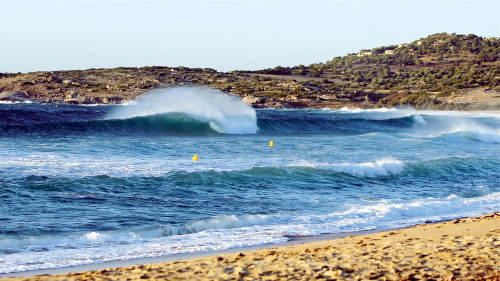
(Image from Stormrider surf guides, the copyright belongs to the original author)
Estimated Reading Time: 14~16 min
There is something exceptional about driving the western edge of Corsica — that rugged Mediterranean shoreline where waves endlessly crash into sheer cliffs, and where the landscape seems to re-assert itself at every turn. Take the winding D81 road between the village of Piana and the port of Porto, and you’ll find yourself squeezed between crimson-pink granite rock walls and the deep cobalt sea. The endless motion of the ocean, the scent of the maquis scrub and salt, and the surprise of wild goats or even a small herd ambling across your path — all of this combines into a rich sensory memory. Indeed, drivers report seeing “hardy Corsican goats freely roaming the wild landscape” along this stretch. [1]
A Wild West Coast Drive on Corsica
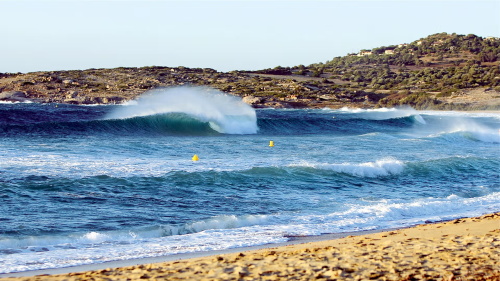
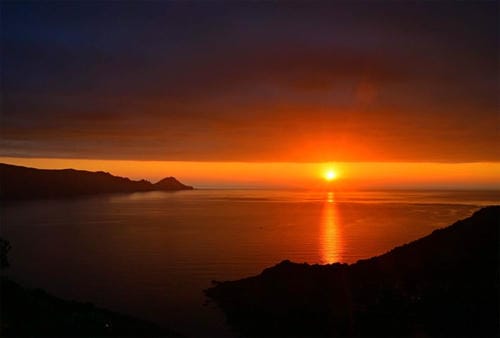
The waves themselves are dramatic. On this side of Corsica the prevailing north-westerlies drive the sea into the rocks, carving out hidden alcoves, underwater caves, turquoise inlets and sudden foamy bursts against granite — as if nature were sculpting in real time. From the coast-side viewpoints you’ll see spray lifting, gulls wheeling, and the stone turning subtly red at sunset as the light lingers on the cliffs of the famous Calanques de Piana. [1]
Driving here isn’t a mere commute: it’s an immersion in wildness. The two-lane road hugs the rock face, occasionally soaring above deep sea stacks and plunging into narrow passes. You’ll want to pause often, simply to watch the swell roll in, to hear the hiss of the waves against granite, and to feel the rhythm of this raw coastline. Through it all, the herded creatures of Corsica quietly go about their lives — especially the island’s iconic goats.
The Goats Along the Coast & Inland
One of the most enchanting and unexpected elements of a west-coast road journey on Corsica is the presence of goats. The native Corsican goat (Capra corsa) is a hardy, long-haired breed perfectly adapted to the island’s rugged terrain — rocky slopes, dense maquis scrub and steep drops below. Their horns curve and their coat marks blend into the wild surroundings.
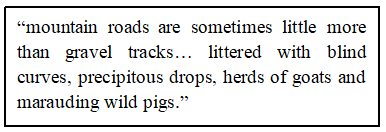
In many parts of the island, particularly along remote roads where agriculture meets wild terrain, you’ll encounter those goats in very human ways. One travel writer described driving Corsica’s mountain and coastal roads and observing that [2]
These goats are not simply decorative. They are part of a centuries‐old pastoral culture on the island. On Corsica the goats roam semi-freely, moving from pasture to pasture in traditional transhumance; their milk yields are small but rich, used in local cheese making and in sustaining island foodways. The sheep, pigs and goats of Corsica have been noted for generating an abundance of local charcuterie and dairy products.
From a travel-blogger’s perspective this means a few things: first, expect to stop or slow down for herds crossing roads or lounging by the roadside; second, use this presence of goats as a gateway to deeper island stories — the older shepherding paths, the maquis that goats clear, the cheese‐making huts tucked into the hills. Third, there’s a visual poetry in juxtaposing the foamy sea, the red cliffs, and a small herd of goats grazing peacefully or looking curiously at your rental car. These moments invite slowing down, letting time stretch a little more than the 70 km/h posted speed limit suggests.
Planning Your Visit: Practical Notes and What to Expect
If you’re seeking to spend time along Corsica’s wild west coast, this section covers key practical elements and things to keep in mind for making the experience truly memorable.
Timing & Season
Late spring through early autumn offers the best mix of comfortable weather, sea-swimming potential and road access. In the shoulder months you’ll get fewer crowds, and the heat will be gentler. Summer can bring full-on Mediterranean sunshine, but also heavy tourist traffic on popular stretches such as the Piana-Porto route. One guide describes the drive between Piana and Porto as “celebrated” yet advises: “As dusk falls, the rocks ignite with fiery tones… traffic can become heavy during the summer months.” [1] Sunset is a particularly magical time: catch the sea glow, the cliffs turning warm pink/red, and quieter roads and beaches.
Driving & Road Conditions
The principal coastal road along this stretch is the D81 (or variations thereof) which hugs the cliffside. While paved and well-maintained, it has narrow stretches, blind corners, steep drop-offs and sometimes rockfall hazard. Slow driving, pulling over for views, and being alert for unexpected goats, sheep or other livestock are all part of the experience. A travel article warns that drivers must be cautious: “Herds of goats are one of the hazards for drivers in Corsica to negotiate.” [2] Renting a compact car or SUV is advisable. If you are comfortable with a manual gearbox (still the norm in Corsica), you’ll have more vehicle options and likely lower cost. Allow extra time for each leg of your drive: you’ll want to stop for viewpoints, goat encounters, and the odd café in a cliff-top village.
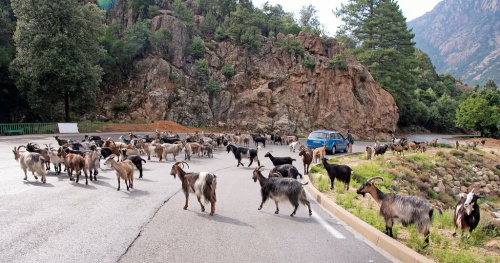
(Image from COOLCORSICA, the copyright belongs to the original author)
Be prepared for a landscape that shifts quickly. One moment you’ll be standing above an azure Mediterranean bay, the next you’ll be rounding a bend into a narrow granite gorge, and beyond that you may happen across a small herd of goats clambering over rock ledges. The native goat breed has evolved for this terrain: “robust limbs and powerful hooves enable these goats to move quickly on difficult terrain.” The contrast of sheer sea cliffs, deep pine-covered hills and pastoral agriculture gives Corsica an edge over more polished Mediterranean resorts.
Culturally you’ll find that Corsica holds onto its traditions. The language (Corsu) has Italianate roots, local cuisine uses goat and sheep milk, charcuterie and chestnuts, and the pace is slower. The goats themselves, though common, serve as symbols of the land’s wildness and human adaptation to rugged terrain. Visits to herder’s huts or cheese makers often surface stories of seasonal migrations, mountain pastures and the simple rhythm of island life.
Rather than ticking off view-points, plan your time to linger. Pause by a bench looking over the sea, listen to the waves, watch goats grazing, and allow the island’s wild calm to seep in. Talk to a shepherd if you meet one in a village; ask about the mountains behind the coast, the paths goats take, what the sea looks like from the herd’s vantage point. In doing so you’ll weave together sea and land, waves and goats, into a richer travel tale.
Post by Rajiv Patel
(All content on this blog represents the personal experiences and opinions of the author. While every effort is made to provide accurate and up-to-date information, travel conditions, laws, and regulations may change. Readers should verify details before making travel decisions.)
Sources:
[1]: https://coolcorsica.com/7-amazing-scenic-drives-in-corsica-for-road-trip-lovers
[2]: https://www.scmp.com/magazines/post-magazine/travel/article/3267536/corsica-road-trip-rugged-scenery-hilltop-towns-traces-napoleon-aggressive-drivers
References:
https://www.francethisway.com/regions/corsica.php
https://www.villagesofcorsica.com/article/corsican-goat-breed-36.html
https://www.thethinkingtraveller.com/blog/things-to-do-in-corsica
Loved this post? There’s more adventure waiting—keep exploring!