A Home on the Move: The Nomad’s Ger in Kyrgyzstan
November 15, 2025
Estimated Reading Time: 12~14 min
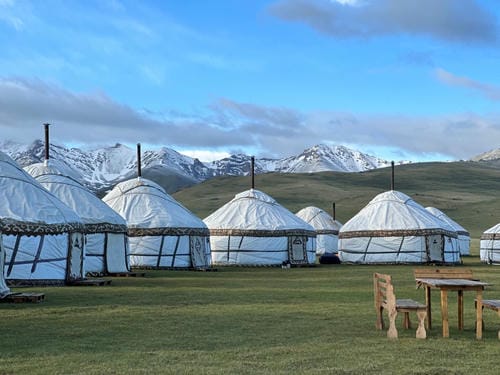
On the vast, rolling plains of Kyrgyzstan, where mountain ridges bleed into open sky, the ger (also known as a yurt) is far more than just a dwelling—it is a living embodiment of a nomadic heart. These round felt dwellings float lightly on the land, moving with the seasons, as generations of Kyrgyz herders carry their traditions from valley to highland pasture and back again. Step inside, and you begin to understand how this simple structure binds a people to their history and to each other.
Constructed with remarkable ingenuity, a ger is made of a wooden lattice framework called a kerege, which supports a conical roof of poles meeting at a central ring known as the tündük. The tündük is not only functional but deeply symbolic, often seen as a representation of the sky, the world, and continuity. Jungles of felt made from sheep’s wool wrap around the frame. This felt serves as insulation, keeping the interior snug in bitter mountain winters and surprisingly cool in summer. [1]
The portability of the ger is its genius: it can be dismantled, carried and rebuilt in a remarkably short time, making it perfectly suited to a lifestyle defined by movement. Within Kyrgyz nomadic communities, the skills of constructing a ger—both its wooden skeleton and the felt coverings—are passed down through generations, weaving together craft, tradition, and survival. The construction process itself involves the whole family and community: men build the frame, while women craft the felt, weave, embroider, and sew decorative coverings.
Inside, the ger’s space is carefully allocated in accordance with tradition and function. As visitors step through the door, they often bow or lower slightly — a gesture of respect — toward the tor area, which is reserved for honored guests or elders. [2] To the right of the entrance lies the women’s side (epchi jak), where cooking, household life, and socializing happen; to the left is the men’s side (er jak), typically used for storing harnesses, tools, and animal gear.[2]
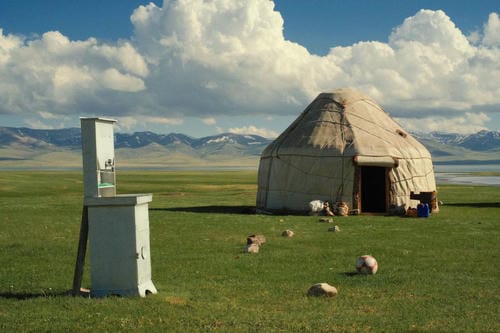
(Image from ASHU TRAVEL, the copyright belongs to the original author)
But a ger is not just practical: it is rich in meaning. Women adorn the interior with felt carpets (shyrdak) and richly embroidered wall hangings (tush kyiz), each piece carrying stories and symbols of their families. The ala kiyiz, made of colored felt, is a traditional textile art form that decorates and insulates the ger, recognized by UNESCO as an intangible heritage. The tush kyiz wall hangings often reflect marriage traditions and personal histories, and are sometimes signed and dated by their makers.
Life in Rhythm with the Land
For Kyrgyz nomadic herders, life in a ger means living in harmony with the natural cycles of their environment. Seasonal migration is fundamental: nomads typically move twice a year, ascending to high mountain meadows (jailoo) in the warm months, and descending into lower valleys during winter. [2] This vertical migration is not random — it follows patterns that have been traced for centuries, carefully attuned to weather, grazing conditions, and traditional knowledge.
This lifestyle remains more than a relic: despite modernization, many Kyrgyz pastoralists still maintain semi-nomadic lives, spending part of the year in permanent homes, but migrating with their herds for the seasonal pastures. Their livelihood depends on their animals — sheep, goats, horses, and sometimes camels — for meat, milk, wool, and leather.
Inside the ger, daily rhythms are rooted in communal rituals. A fire in the center, under the tündük, warms the space and acts as a gathering point. Meals are often simple but meaningful: dairy products (like yogurt or kymyz, fermented mare’s milk), boiled meat, sometimes vegetables or grains when available. Hospitality is central. Guests are welcomed with tea, bread, and sometimes kymyz; sharing food is a gesture of deep respect and connection.
Wool plays a central role in this life. After shearing, typically in autumn, the wool is cleaned, carded, and felted into large sheets. Women apply their artistry to turn these into shyrdak carpets, rugs, and wall hangings, while also creating symbolic embroideries and patterns that express both aesthetic beauty and cultural values. The felt also serves as insulation, keeping the ger warm in icy months and relatively cool in summer. [3]
Craftswomen are the keepers of tradition, and in recent years there has been a revival of felt-making as both art and livelihood. [3] Many of these artisans work in community groups, passing down skills from grandmother to granddaughter, not just to preserve heritage, but to affirm identity.
This artistic tradition is deeply linked to the Kyrgyz worldview: the ger and its felt decorations are not just utilitarian, but ritual and symbolic. In the words of one craft expert, the yurt represents a “model of the universe,” with its round shape and central ring symbolizing the sky and life itself.
Tradition, Identity, and the Modern Revival
The ger is woven into the very fabric of Kyrgyz national identity. It is not only a living home but a powerful cultural symbol. The tündük — the circular roof ring — is so iconic that it even appears on Kyrgyzstan’s national flag, standing for continuity, unity, and connection to the land. The craft of building yurts, making felt, and decorating the interior has been recognized internationally. UNESCO inscribed the traditional knowledge and skills of Kyrgyz and Kazakh yurt makers on its Intangible Cultural Heritage list. This recognition underscores how these practices foster community, cooperation, and a shared cultural imagination.
Yet this heritage was challenged. During the Soviet era, many nomads were encouraged or forced to settle, to give up their herds, and to adopt a sedentary lifestyle. Despite those pressures, many elements persisted — the respect for horsemanship, felt craft, yurt-making — and after independence, there has been a resurgence of interest in these traditions.
Today, as tourism to Kyrgyzstan grows, ger camps offer travellers the chance to step into a nomadic world. These stays can be deeply immersive: guests help erect or dismantle the ger, sample local food, listen to stories around the hearth, and gaze at starlit skies through the tündük. [4] Participating in those simple rituals — being offered tea, sharing meals, listening to the quiet of the night — offers a profound window into a way of life that feels both ancient and alive.
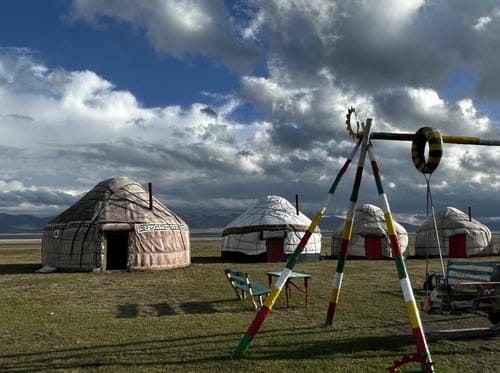
(Image from Nomads Life, the copyright belongs to the original author)
More than a travel novelty, these experiences support the craft economy: tourist demand supports artisans making shyrdak rugs and embroidered wall hangings (tush kyiz) that visitors often purchase to bring home a piece of nomadic art.
At the heart of it all, the ger remains a symbol of resilience. In its structure — strong yet flexible — and in the way it anchors people even as they move, the yurt mirrors the nomads’ own capacity to adapt without losing their roots. The felt panels, stitched in swirling patterns or geometric designs, reflect not just the artisans’ skill, but their stories, dreams, and sense of belonging.
In the high pastures of Kyrgyzstan, where wild winds whistle and horses graze freely, the ger stands as a quiet testament to a people who carry their home in their hands, their heritage in their wool, and their spirit on the open step.
(This blog reflects the author’s perspective and interpretation of different cultures and locations. Readers are encouraged to respect local customs and conduct further research to gain a full understanding.)
About the Author:
Rajiv Patel is a professional travel photographer and a graduate of the School of Visual Arts. With 15 years of experience documenting destinations from bustling cities to remote villages, he combines storytelling and imagery to bring travel experiences to life.
Sources:
[1]: https://nomadsland.travel/en/before-you-go/kyrgyzstan/understand/further-reading/yurts
[2]: https://kyrgyzstan-tourism.com/blog/nomadic-life-kyrgyzstan
[3]: https://folklife.si.edu/magazine/women-artisans-central-asia-kyrgyzstan
[4]: https://ecotour.kg/our-tours/culture/nomadic-culture-festival
Hungry for travel inspiration? Click around and find your next trip!