Gliding at Dawn on Maine’s Waters in a Traditional Seaweed Harvest Ride
November 17, 2025
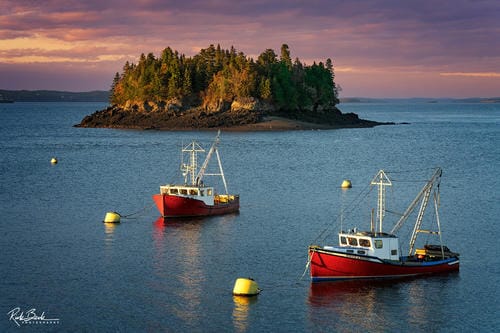
(Image from Rick Berk, the copyright belongs to the original author)
Estimated Reading Time: 13~15 min
The first clang of the boat’s engine echoes off the salt-laden air well before sunrise, cutting through the deep black of a Maine morning as the shoreline blurs past. In the faint glow of dawn, a handful of vessels slip quietly out of their moorings, making their way to the submerged ropes and lines where thick ribbons of seaweed cling in the depths. For visitors this is a hidden chapter in the maritime story of the Gulf of Maine, a moment when a traditional waterfront community shifts gears from lobster traps to seaweed harvest. The ritual of gathering sea vegetables at first light is far from the typical tourist itinerary—yet it opens a window into a working waterfront that pulses with heritage, adaptation, and the sea’s dynamic rhythms.
As the boat draws alongside a long string of kelp hanging beneath the surface, the diver slips into the cold water. The sea at dawn is near stillness, save for the tug of the tide and the creak of the boat settling against its mooring. Underwater visibility reveals the blades of sugar kelp dancing in the current. With practiced motion, the diver clips or cuts the fronds near the surface anchor point, dragging them aboard in bundles. The harvest season in Maine is bracketed tightly by nature: the cold winter months foster rapid kelp growth, and as the water warms, biofouling sets in. For a short few weeks—often around late April to early May—these harvests unfold under the cover of dawn and in tandem with tidal schedule.
How’s that for a vantage point on Maine’s maritime culture? You’re not simply watching a boat cast off—you’re part of a quiet sub-culture of seafarers who have embraced seaweed not only as a new crop, but a marker of change for the entire coastline.
More than Seaweed: Heritage, Economy & Ocean Change
Behind that early-morning outing lies a layered story of tradition, resilience and transformation. For generations, coastal Maine harbors have echoed with the staccato rhythm of traps being hauled and lobsters brought aboard. But the warming waters of the Gulf of Maine—and shifting ecosystems—have pressured that way of life. In response, many fishers and communities have looked to seaweed cultivation—especially kelp—as a way to diversify their livelihood and reinforce local economies.
The seaweed industry here is both emergent and deeply rooted. While kelp farming in Maine is a relatively recent commercial venture, the harvesting of edible “sea vegetables” has a long history along these shores. Native Wabanaki people harvested seaweeds, and early settlers too engaged in gathering sea vegetables for subsistence and trade. When you join a dawn harvest you’re touching into this lineage—giving your travel story richer texture than sunbathing or lobster dinners alone.
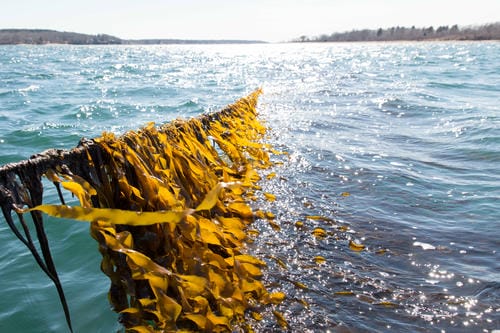
What you’ll learn is: seaweed harvesting is shaped by the tide, by the cold of the water, by small boats and committed crews. The blades are cut above the meristem—so the plant can regrow—about six inches above the stipe. Harvesters are careful not to remove more than about 30% of the biomass in a given patch so the beds can renew. That means this isn’t just a photo-op—it’s a living ecosystem practice. You’ll watch as a crew lifts sacks of kelp aboard, the scale of the wet harvest surprisingly heavy: tons in a good day. One mid-coast operator reported near 9,000 lb off one boat.
Your role as a traveler—if invited aboard—is to observe, listen, ask questions. You’ll hear about how harvesting aligns with the lunar cycle and tides; about how the lines must be tended and how the fronds grow seasonally; about how the value chain extends inland to processors making chips, condiments, or even cosmetic ingredients.
And there’s another layer: the ecological benefit. Studies near kelp farms show that seaweed helps buffer coastal acidification and provides healthier conditions for shellfish like mussels and oysters. For the visitor, that means your dawn ride isn’t just picturesque—it’s part of a living story of climate adaptation, community shorelines re-tooling for a changing ocean. It gives your travel tale depth.
Getting There: Planning the Experience
Embarking on a dawn seaweed harvest voyage in Maine requires a mix of practical preparation and an open mindset. For starters: you’ll want to aim for a region where seaweed harvest is active—such as the mid-coast towns in Knox and Cumberland Counties, where farming licenses and lobster-to-kelp transitions are strongest.
Contact local harvester groups, seaweed cooperatives or aquaculture tours that may allow guest participation or observation. Smaller outfits like hand-harvesters on the outer islands of Penobscot Bay welcome visitors to witness operations in small boats. Evening may see processing bays; morning may be on the water. Dress for cold, damp conditions—even in spring the water is bracing, and dawn wind is keen. Wear waterproof boots, warm layers, and bring gloves with good grip—the deck is wet, ropes slick.
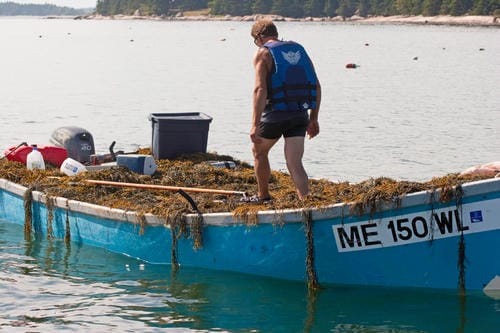
Expect to be up early. The boats leave before dawn. You’ll want to have your camera ready, but also your ears tuned: you will hear the tide being called, the mooring lines, the seabird calls, the clink of hardware. You’ll feel the cold mist, the spray from the bow, the briny tang of the coastal air. If you’re lucky you’ll soak in the moment when the sky lightens from navy to indigo to pink, the seaweed glistening in the slant of rising sun. If asked, you may lend a hand hauling the kelp bags, or simply watch as the crew pulls burlap-style sacks off the deck and onto a small truck bound for the processor.
Ask questions:
-Why this spot?
-What species are we harvesting?
-How do tides and currents affect the pickup?
-What are the challenges—biofouling, market price, weather?
You’ll hear about the product’s journey—from blades trimmed at sea to chilled truck to value-added goodies on a shelf perhaps 100 miles away. In 2024 one Maine firm harvested over 1.3 million pounds of farmed seaweed, paying more than a million dollars to fishing families.
For meals afterward, look for restaurants using fresh‐harvested kelp or local sea vegetables. They might serve kelp chips, salads or fermented seaweed products. It’s a way to continue the story of the morning into your palate. If you have time stay the morning, visit a processing shed, or the drying racks where kelp stalks hang like giant green ribbons shimmering in the breeze.
If you’re visiting during shoulder seasons—late April through early May—you’ll hit the heart of harvest. After that the growth wanes, fouling increases, and activity drops.
For accommodations, choose a harbor-town B&B or a guesthouse near the docks so you’re ready at 4 a.m., if that’s what it takes. Travel lightly, sleep early, and enjoy being part of the pre-sunrise awakening of Maine’s kelp waters.
(Travel involves risks. The author is not responsible for any injuries, losses, or damages that may occur while following advice, itineraries, or suggestions provided on this blog. Always exercise caution and follow local rules.)
About the Author:
Ethan Brooks is a former airline pilot turned travel author. His deep understanding of aviation and global logistics makes his travel advice both practical and insightful.
Reference:
https://www.islandinstitute.org/2025/06/25/something-in-the-water-how-kelp-is-helping-maines-mussels-boom
https://seaweedcouncil.org/msc-harvester-information
Adventure calls! Explore more articles and feed your wanderlust!