Wandering Through Venice’s Six Sestieri: A Traveler’s Walking Guide
November 16, 2025
“Walking through Venice’s six historic sestieri — from the iconic piazzas of San Marco to the quiet canals of Cannaregio and the arty corners of Dorsoduro — reveals a city of layered charm, local life, and unforgettable vistas beyond the guidebook sights.”
Updated March 28, 2026
Estimated Reading Time: 12~14 min
As you set foot in Venice, preparing to wander through its labyrinth of canals and narrow alleys, it helps to understand the city as more than just its postcard-scenes. Venice’s historic heart is divided into six districts—known as the sestieri—that each carry their own charm, rhythms and stories. These are San Marco, San Polo, Dorsoduro, Cannaregio, Castello and Santa Croce.
Discovering the Lay of the Land
As you walk, keep in mind that these divisions aren’t just administrative—they reflect how Venetians live, where visitors go, and how the ebb and flow of canals, churches, bridges and small squares connect into a coherent whole. The Grand Canal may seem like a highway of sorts for water traffic, but the six sestieri weave across both banks and offer contrasting experiences.
This guide invites you to slip into the rhythm of Venice by moving from one district to another, letting the city reveal its quiet corners, its bustling hubs and its shimmering canals. We’ll follow a walking plan that loosely visits San Marco and San Polo (the tourist epicenter), then shifts toward the more local-feel sestieri of Dorsoduro, Castello, Cannaregio and Santa Croce.
A Walking Route Across Contrasts and Charm
Begin your stroll in San Marco, the iconic heart of Venice. Emerging from the vaporetto stop or from a bridge over the Grand Canal, you arrive in the district that holds the famous Piazza San Marco and the majestic Basilica di San Marco. The tranquil grandeur here—ornate facades, soaring campanile, cafés under arcades—belies the fact that you’re in one of the busiest zones of the city. While strolling through this sestiere, pause in a small side calle (street) or along a canal to hear the quieter echoes of Venetian life between the grand sights.
From there, head west across the Grand Canal—via either the pedestrian walkway or a vaporetto—to San Polo. This is the smallest of the sestieri, but rich with atmosphere. Here you’ll find the famous Rialto Bridge spanning the canal and the vibrant market that has served Venice for centuries. Walk away from the bridge over the footways lined with fish stalls, produce and Venetian specialties; then continue inward to quieter alleyways and lesser-known churches that shine in the golden light of late afternoon.
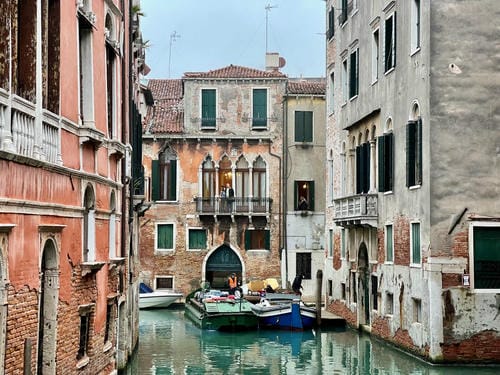
Next, cross again to Dorsoduro, a place of art, quiet canals and sunset reflections. Here the student crowds, art galleries and bars around Campo Santa Margherita meet quieter pockets of residential calm as you approach the water’s edge at Giudecca. Take your time on the Zattere waterfront promenade, looking back across the lagoon to San Marco. A moment here allows you to inhale the lagoon breeze and listen for the water lapping gently against the quays.
Move then into Castello, Venice’s largest sestiere, stretching toward the lagoon and encompassing both grand monuments and local life away from mass tourism. Walk beyond the tourist-rich western fringe near San Marco and explore eastward toward Sant’Elena and the Arsenale waterfront, where fewer visitors venture and the scaled-down pace invites lingering.
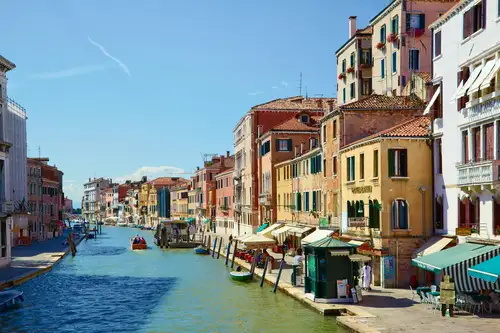
From Castello, pivot to Cannaregio, weaving north of the Grand Canal. Here you’ll encounter a Venice of locals: the old Jewish ghetto, quiet fondamenta (canal-side walks) and neighbourhood cafés where you can sit and absorb the life of the lagoon city at a gentler pace. Time your walk along the canal behind the station toward the Strada Nuova and relish the interplay of light, ageing walls and water reflections.
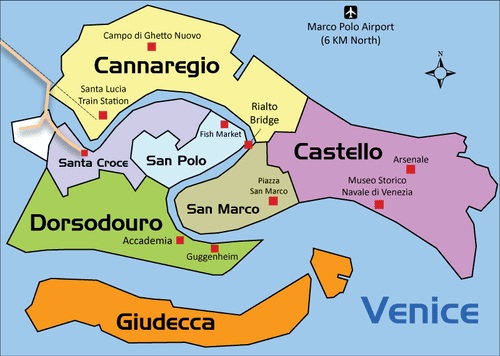
(Image from Wandering Italy, the copyright belongs to the original author)
Lastly, head to Santa Croce, often overlooked by many travellers yet offering a fine finale to the day's stroll. This district includes the transport hubs (bus and car access) but also hides tranquil squares like Campo San Giacomo dell’Orio, simple neighbourhood bars and a chance to see Venice when the sun is low and most crowds have dispersed. Pause at a local osteria or wine bar and reflect quietly on the textures of Venice’s sestieri—from the gilded gildings of San Marco to the everyday canals of Cannaregio.
As you pace yourself, allow time for spontaneous detours: a narrow bridge whose curve catches the light just right, a ghost-quiet courtyard off a canal, a small church door half open to reveal dusty frescoes. In Venice, the best moments often arrive when you step away from the maps and allow the sestieri themselves to guide you.
Tips for Getting the Most from the Walk
Choose early morning or late afternoon for your walk: Venice at dawn is softly lit, with mist lingering over canals and very few tourists in full force. In the late afternoon and early evening, the light drapes the city in gold; lanterns begin to glow and the reflections deepen. Avoid the peak midday glare when the streets feel hotter and heavier with foot-traffic.
Wear comfortable shoes: the pavements, bridges and alleyways of Venice are uneven; some calls (alleys) curve unexpectedly or rise subtly to a bridge. Walking across two or three sestieri can easily cover several kilometres, especially if you drift off into side streets. Keep a map (digital or paper) but embrace the unpredictability. Getting turned around here is not a failure, it is part of the charm.
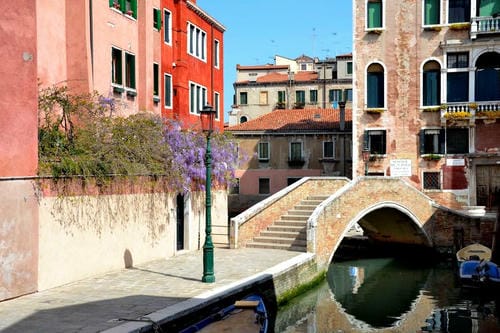
Take pauses: whether on a bench by the water in Cannaregio or at a café overlooking the Grand Canal in San Marco, allow yourself to simply watch the city. The boats, vaporetto wakes, gondolas, the chatter of locals and the whisper of water against old stone—these are as much part of Venice’s magic as the architecture.
Stay hydrated and choose flexible lunch spots: In San Polo and Dorsoduro you’ll find lively markets and small bacari (Venetian wine bars) serving cicchetti (small bites). Try stopping for a mid-afternoon spritz and plate of morsels in one of these neighbourhood spots to refuel and deepen your connection with local rhythms.
Bring a camera (or keep your phone ready) but don’t obsess over perfect shots. Some of the most memorable pictures come from spontaneous moments—a shaft of light through a calle, a rowboat tied to a green pole, an open doorway beckoning you in. Venice’s sestieri invite wandering, not just seeing.
Avoid the busiest bridges and plazas at peak times. For example, while you’ll want to visit the Rialto Bridge and Piazza San Marco, consider doing so very early or very late, and spend the middle of your walk in the quieter sestieri evenings. The contrast will deepen your sense of Venice’s layered identity.
Many bridges, even in central Venice, require you to carry your bags up and down steps. If you’re sightseeing for a full day across multiple districts, a small backpack or sling-bag is easier than rolling suitcases among the crowds.
By choosing to walk across the six sestieri rather than staying in just one or focusing on only the big landmarks, you give yourself the gift of seeing Venice more deeply. You’ll discover its grandeur and its quiet corners, its tourist heartbeat and its local pulse. And you’ll feel how this city isn’t just about canals and bridges—but about the people, the water, the reflections and the slow unfolding of scenes that reveal themselves only by foot.
Post by Marina Delgado
(Views expressed on this blog are solely those of the author and do not reflect the opinions of any organization, company, or third party mentioned. By using this blog, readers agree that the author will not be held liable for any direct or indirect damages, inconveniences, or losses resulting from the use of the information provided.)
References:
https://www.wimdu.com/blog/a-guide-to-the-six-sestieri-of-venice-3
https://www.wanderingitaly.com/maps/venice.html